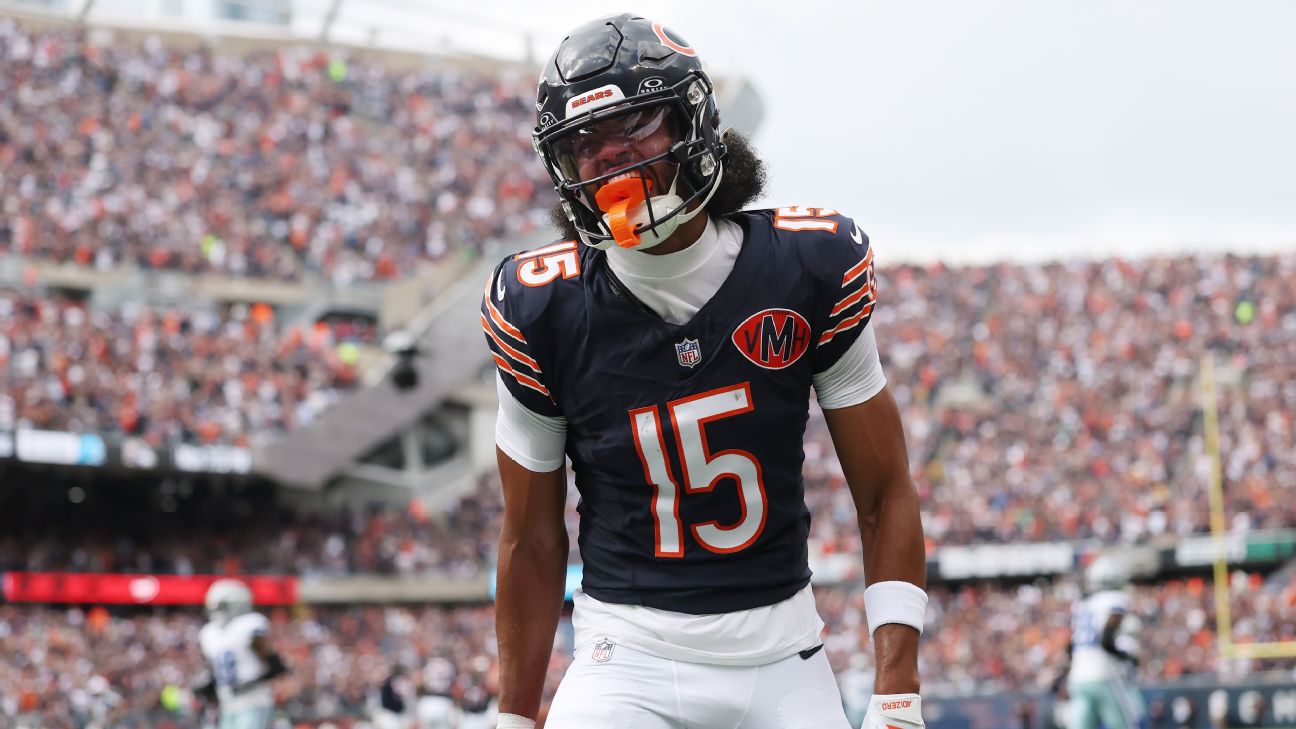
A sleeper, properly defined, is a player whose draft cost says the public is sleeping on him relative to what he could realistically do this season. That's the definition the industry converged on this week, and it's a good one, but it hides something. The label gets stapled to three very different wagers: a player whose existing production the market is ignoring, a cheap share of an offense that has to be good for the pick to work, and a camp report the ADP simply hasn't heard yet.
Those bets deserve different amounts of your draft capital. The first kind can be a starter. The second kind is a portfolio decision about a team, not a player. The third kind belongs in your last two or three picks and nowhere earlier. Below is the 2026 board, sorted accordingly.
A note on sourcing: ADP figures are FantasyPros consensus as of August 18 and move daily. Where a stat below comes from an analyst's on-air case rather than a published leaderboard, it is attributed as such.
The production the market is ignoring
The safest sleeper is one who already did the thing you're paying for, in games you can go watch.
-

Quentin Johnston LAC
The Chargers' WR1 conversation centers on Ladd McConkey, but the healthy-weeks numbers point somewhere else. Johnston hurt a hamstring in week 5, missed week 6, returned limited, and was a non-factor through week 8, when he drew zero targets. Set those weeks aside and the analyst case is that he led the Chargers in target share, yards per route run, red zone targets, deep targets, missed tackle rate, and first-read share, producing at a mid-WR2 clip. Treat those splits as the argument being made rather than as published fact. They come from a proprietary cut, and his full-season finish was WR34. What is checkable is the price: he goes as the WR41 around pick 111, while McConkey goes inside the top 20 receivers. McConkey is the better bet to hold a role; Johnston is the better bet on the gap between role and cost.
-

Deebo Samuel SF
Back in San Francisco on a one-year deal worth up to $7 million, reunited with the quarterback and play caller who know how to use him. Yes, there were decline signs, chiefly a career-low 6.5 yards after the catch per reception, but that career low still ranked 9th among wide receivers. He posted a career-high 64.2% slot rate and finished WR29 in points per game. He's going as the WR50. The honest caveat: you're drafting front-loaded production, and the week-to-week line was violent rather than steady, running roughly WR7 through five weeks, then a stretch in the WR50s. Plan the exit around midseason rather than pretending the second half will look like the first. Mike Evans is also new here, which caps the target ceiling.
Both men are the same shape of bet: a real season already on tape, priced in the forties or fifties. In each case you are not projecting a leap. You are waiting for the price to notice.
The rest of the tier, in rough ADP order:
-

Wan'Dale Robinson TEN
140 targets in each of the last two seasons. The only other receivers to clear 130 twice running are Ja'Marr Chase, Amon-Ra St. Brown, Jaxon Smith-Njigba, and Justin Jefferson. He went for 1,014 yards on 92 catches in 2025, his first thousand-yard season, ranked 21st among wide receivers in deep targets once the Giants finally used him downfield, and then followed Brian Daboll, the play caller who fed him all of it, to Tennessee on a four-year deal. He's the WR40 at around pick 93. That is a fair price rather than a steal, so the bet is specifically on the Daboll reunion adding volume he has already proven he can absorb.
-

Rachaad White WAS
40 or more catches four straight seasons, a top-10 fantasy finish in 2023 on his resume, and a floor that has stayed startable even in his worst years. He signed with Washington to play with Jayden Daniels, his college teammate at Arizona State, and with Laremy Tunsil out for most of the season after triceps surgery, quick throws and pass protection get more valuable, not less. He converted short yardage well in 2025 at a roughly 48% success rate. He's the RB41. Losing early-down work to a younger back is the risk, and it's priced in.
-
Kenneth Gainwell TB
Over the back half of 2025 he ranked 4th among running backs in yards per route run and 1st in first downs per route run. Read that as a late-season split, not a full year. Tampa Bay let Rachaad White walk and signed Gainwell into the role that made White a fantasy producer, next to a talented starter in Bucky Irving who has dealt with a string of injuries since entering the league. The gap between their draft costs is most of a hundred picks, in a backfield that has supported two fantasy-relevant runners before.
-

Jayden Higgins HOU
The cleanest ADP gap on the board. Houston drafts its WR1 inside the top 10 and its WR2 at 53. From week 8 of his rookie year on, as a part-time player, Higgins finished as a weekly WR3 or better in seven of eleven games; among 119 qualifying receivers over that stretch he was 24th in targets per route run and 25th in route win rate. Nico Collins is not exactly the bastion of health, and there's no target-hungry tight end in that offense.
Section 1 · Proven usage
Seven of eleven
Jayden Higgins' games from week 8 of 2025 on, played as a part-time member of the Houston offense.
7
of his 11 late-season games were weekly WR3-or-better finishes
- wk
- wk
- wk
- wk
- wk
- wk
- wk
- ·
- ·
- ·
- ·
Cheap access to an offense: decide the team first
The second kind of sleeper is a discounted share of an offense you expect to be good. The pick is only as sound as the team thesis under it, so settle the team question before you click the player.
The Bears, and Rome Odunze.Chicago's passing game supports three expensive pass catchers in Colston Loveland, Luther Burden III, and Odunze, a shape that historically almost never gets drafted this way. Odunze started 2025 hot, scoring five of his six receiving touchdowns by week 8, then picked up a foot problem in October, played through it badly, aggravated it in December, and missed the last five games with a stress fracture. He has consistently earned the high-value work (air yards, red zone, end zone), and DJ Moore, who tied him for the team lead with six receiving touchdowns, has been traded to Buffalo. The offense should be in shootouts all year: Chicago led the NFL with 33 takeaways in 2025 while ranking 29th in yards allowed, and that secondary is now missing Jaylon Johnson and Kyler Gordon. Odunze is the WR27, Burden is dealing with a groin injury that should not cost him week 1, and the three of them are priced within a round of each other.
The Chargers, and Tre Harris.If you missed Johnston, Harris is the deeper cut on the same team thesis, going as the WR74 around pick 204. He is the only true X receiver in the room, the coaches mention him in the same breath as Johnston and McConkey, and the college resume is genuinely rare: in his injury-shortened final Ole Miss season he became the first Power-5 receiver in PFF's database to average over 5.0 yards per route run, and he ranked 1st of 267 qualifying FBS receivers in yards per route run against man coverage that year after ranking 18th of 288 the year before. His rookie sample was 30 catches, which is the hedge.
The Titans, with an asterisk.One prominent draft-week roundtable built nearly half its board on Tennessee: Carnell Tate, the No. 4 overall pick, who ranked 10th in yards per route run and 4th in receiving grade in his final Ohio State season with zero drops on a 14.6-yard average depth of target, and who goes as the WR30 at pick 71. Add Wan'Dale Robinson above, plus the run game. The case is Daboll, hired from the Giants as offensive coordinator under Robert Saleh: his offenses have historically funneled huge volume to his guys, and Cam Ward doesn't need to be spectacular in year two for the pass catchers to eat. But be honest about the disagreement. Our own draft blueprint crossed the entire Tennessee offense off over the offensive line and Ward's mechanics, and at least one analyst who liked Tate this spring is publicly getting cold feet. If you buy the Daboll thesis, Tate and Robinson are the entry points. If you don't, no discount on the pieces fixes the team. Decide once, then draft consistently with it.
The scheme change nobody is pricing
Jordan Mason.Minnesota's biggest offseason story that isn't the quarterback battle is a run-game overhaul. The Vikings hired Frank Smith to install more wide-zone concepts, the San Francisco design, and Kevin O'Connell has described Mason as exactly the zone-scheme runner it calls for. Mason ran in that scheme for years in San Francisco, where he has averaged 5.8 yards per carry on outside-zone runs over the past three seasons on a 90.7 PFF rushing grade. The head-to-head with Aaron Jones favors him on the two measures that have published numbers, and Mason's career 5.1 yards per carry ranks third among the 56 backs with at least 300 carries since he entered the league. He has reportedly dropped weight from a listed 230, which the coaching staff has praised.
Section 3 · The scheme bet
Mason vs. Jones on the ground
2025 season figures for the two backs now competing in Minnesota's new wide-zone scheme.
Forced missed tackle rate
Explosive run rate
The shape of the bet matters: Mason is not going to catch a ton of passes, so this is a rushing-volume and goal-line play, not a PPR one. It is also not a clean depth-chart win. Jones re-signed on a restructured one-year deal and the two go within a few picks of each other. But if the primary runner on a functional Kevin O'Connell offense returns RB2 numbers at his current cost, that's the whole point of a sleeper.
The camp-report tier: last picks only
The third kind of sleeper is a drumbeat: practice reports, coach quotes, preseason snaps. Two honest framings before the names. First, the history: day-two and day-three rookie receivers play sharply fewer snaps than first-rounders over the opening month, which is why they're usually bad picks. Second, the confession one veteran analyst offered about this exact week of the calendar: every year there's a pile of guys who are "kind of interesting" in August, and by week two most of them stink. The process still works, but only at a last-round price, where cutting bait costs nothing.
-

Pat Bryant DEN
The loudest camp drumbeat in the league. Teammates name him unprompted, Sean Payton is infatuated (the coach-speak comp is Michael Thomas, which you should discount accordingly), and even the defensive coordinator talks him up. The substance under the noise: a 74th-overall pick who averaged six targets a game from week 11 of his rookie season on, and who caught all three of his targets for 32 yards on the opening drive of the divisional round against Buffalo before a concussion ended his day. Bo Nix led the NFL with 612 pass attempts in 2025, so the volume exists. Courtland Sutton is nearing the end; Bryant is the WR79.
-

Cyrus Allen KC
A fifth-round rookie taken 176th who wasn't invited to the combine, tied for third in the FBS with 13 touchdowns last season, and has run with the ones all preseason. By one report he was "undoubtedly Patrick Mahomes' favorite target" this summer, with Xavier Worthy and Tyquan Thornton hurt and Rashee Rice's own price falling. His best-ball ADP has climbed from undrafted into the 13th-to-17th round range, and Kansas City is favored in five of its first six games. Respect the counter-argument: there is a hyped Chiefs receiver every single year, and most of them fizzle. The tell will be week 1. If he's at 80%-plus of snaps, you have something; if he's at 30%, cut bait immediately.
-

MarShawn Lloyd GB
The rare last-round pick who could start week 1. He is the clear backup to Josh Jacobs, and Jacobs is managing a groin injury with an unresolved league investigation into a May incident on top of it. Lloyd's own injury history is the longest in this article, which is why he costs nothing.
-
Denzel Boston CLE
Could be Cleveland's WR1, took every snap and route available with the starters in the preseason opener, and goes around the 13th round.
-
KC Concepcion CLE
The other half of the same bet, crushing camp with a strong preseason game behind him, and going a round or so ahead of Boston as the WR51. The play one analyst suggested: draft both Browns receivers, park them on your bench, and by week 5 the offense will tell you which one to keep. The quarterback situation is the obvious ceiling on both; the case is "just get him targets," not "this passing game will be good."
-
Ted Hurst TB
The WR96 around pick 290, undrafted in most leagues. Tampa Bay keeps spending draft capital on receivers rather than trusting Jalen McMillan, and Hurst is the one blowing up camp.
-
Greg Dulcich MIA
2nd among tight ends in yards per route and 5th in target rate per route last season, on a Miami roster that lost both Tyreek Hill and Jaylen Waddle. Ask who the Dolphins' leading receiver actually is and the honest answer might be Dulcich, at a TE30 price.
-

Terrance Ferguson LAR
11 catches for 231 yards as a rookie, nearly 21 yards a reception on an 18.3-yard average depth of target. The Rams' tight end room is four deep, but the receiver room behind an aging Davante Adams and a groin-sore Puka Nacua is not, and Sean McVay has been talking up Ferguson's after-the-catch ability while playing him with the starters in every formation.
-
Dylan Sampson CLE
First in target rate per route among running backs as a rookie and at or near the top in yards per route, keeping statistical company with Christian McCaffrey, Bijan Robinson, and Jahmyr Gibbs. Todd Monken, now Cleveland's head coach, kept Derrick Henry off the field in obvious passing situations in Baltimore; there's a clear path where Quinshon Judkins never becomes a three-down back and Sampson owns the passing game.
Sleepers die by news: build the exit into the pick
Monday night's Keenan Allen signing is the cleanest possible case study in how fragile this tier is. The Colts gave Allen a one-year, $8.32 million deal, and Josh Downs, a popular sleeper as recently as Sunday, lost his thesis overnight. The hope was that Downs, finally freed to play outside with Michael Pittman traded to Pittsburgh, could push for a team-leading target share. Allen is 34 and doesn't have much explosiveness left, but he led the Chargers with 81 catches last season and has spent seven seasons with Shane Steichen. He isn't signing that deal to sit, especially with Alec Pierce still working back from March ankle surgery. Analysts docked Downs anywhere from one to three rounds within a day.
Two honest addenda. First, the same news creates a new sleeper: Allen himself will go absurdly late because ADP never catches up to an August signing, and he opened last season with three touchdowns in his first three games and exactly one after that. Front-loaded, like Deebo, so draft him with the exit planned. Second, this cuts both ways all week. Jordyn Tyson's hamstring injury, suffered in a joint practice on August 13 with a reported two-month timeline, just did to Tyler Shough's ceiling what Allen did to Downs, and simultaneously bumped Juwan Johnson, who drew 102 targets last year, into the late-round tight end conversation while handing Chris Olave an unambiguous WR1 role.
Where the debate is legitimate
Two players from this week's shows drew genuine, unresolved disagreement, and one of them is with ourselves.
Jonathan Brooks.He has climbed most of the summer and now sits around RB40, with some industry drafts taking him as early as round 6. The bull case: second-round pedigree, roughly 19 to 20 months removed from his second ACL surgery by week 1 rather than the freshly-rehabbed timeline people assume, a stated plan from Carolina to use him on third downs and in the passing game, and a starter in Chuba Hubbard who finished dead last among 49 qualifying backs in explosive run rate, with zero explosive runs all season, and who already lost this job once, to Rico Dowdle, who went on to take 51% of Carolina's carries. The bear case: he has done nothing in the NFL except get hurt, Hubbard isn't going away even if Brooks wins the job, and the offense may not support a timeshare. The doomsday comp is last year's Titans backfield, where the split made both backs useless. The honest synthesis is that Brooks has already stopped being a sleeper. From here you're paying close to the projection, and the sixth round is paying for the outcome.
Tony Pollard.The bull case, made forcefully this week: the RB29 at pick 72 for a projected workhorse under a staff that has historically leaned on one back, 22nd in yards after contact per attempt last year, behind a line that ranked 13th in yards before contact per attempt. That is an RB2 role at an RB3 price. We're obligated to note that our own blueprint faded him a day earlier, and the preseason opener was genuinely split: Pollard took four carries for 22 yards and a touchdown, Tyjae Spears four carries for 35 plus a catch. Both cases turn on the same uncertainty, whether the volume is really his, and one preseason series is a thin sample in either direction. If you believe the depth chart, he's one of the better values in the draft. If you believe the August usage, he's a trap at a discount. This one is a genuine coin flip, and we'd rather tell you that than pick a side with false confidence.
The short version
Read next



Week 4
NFL Week 4 2026 Post-Mortem: Don't Get Too Cute
The Ravens and Vikings held, and only 320 of 6,292 Circa Survivor entries went out. The ones who lost mostly paid for trying to be clever with the Bills, Lions, Steelers and Cardinals.
Thomas Deane 4 min



Week 5
NFL Week 5 2026 Survivor Picks
Pinnacle has the Cowboys at -449 over a Tampa Bay team starting an undrafted rookie, and close to half of every pool is on them tonight. The full-season plans take Dallas in a small pool and Houston in a big one, and four of the board's best later games run through a Giants team that is 3-1.
Beau Halding 11 min